
Electric MEWPs are widely used for construction, maintenance, MEP work, electrical installation, warehousing, and other work-at-height applications across the Gulf. In the UAE, Saudi Arabia, Qatar, and Bahrain, battery-powered access equipment can provide a quieter and cleaner alternative to diesel-powered machines, particularly for indoor and controlled environments.
However, reliable operation starts with a proper pre-use inspection. The battery is a critical part of an electric MEWP, and problems such as damaged cables, loose connections, corrosion, leaks, or overheating can affect machine performance and create safety risks.
Before operating an electric scissor lift, boom lift, or other battery-powered MEWP, operators should inspect the battery system as part of the machine's normal pre-use checks and follow the manufacturer's instructions.
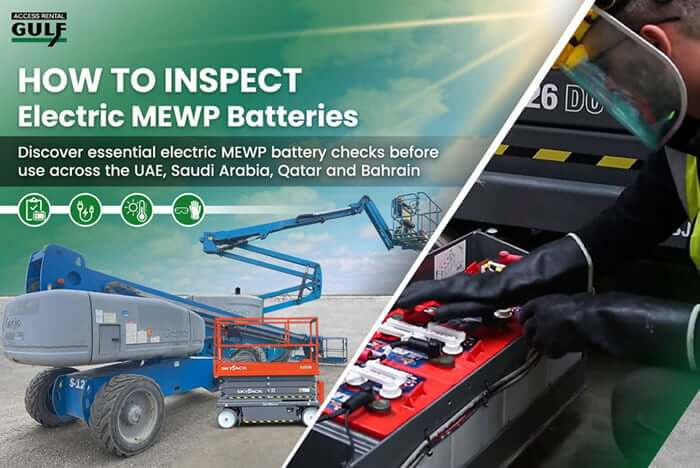
Why Is Electric MEWP Battery Inspection Important?
The battery supplies the power required for essential functions on an electric MEWP. If a battery fault is overlooked, the machine may lose operating time, fail to charge correctly, or stop working during a task.
Regular inspections can help identify problems before they develop into more serious equipment or safety issues.
Common issues that may be identified during a pre-use battery check include:
- Damaged battery cables or charging leads
- Loose electrical connections
- Corroded terminals
- Cracked or damaged battery casings
- Battery leaks
- Swelling or deformation
- Signs of overheating
- Incorrect electrolyte levels in applicable lead-acid batteries
- Damaged charging connectors
- Loose battery components
For companies using access equipment in the UAE, Saudi Arabia, Qatar or Bahrain, identifying battery problems early can also help minimise unexpected downtime and prevent avoidable equipment damage.
What Should Operators Check Before Using an Electric MEWP?
Battery checks should form part of the operator's pre-use inspection before the machine is put into service. The exact inspection procedure will depend on the MEWP model, battery type and manufacturer's instructions.
A basic visual inspection should cover the battery compartment, connections, cables, terminals, charging equipment and any accessible components.
Operators should never attempt repairs outside their level of competence. If a serious fault or visible damage is discovered, the machine should be taken out of service, and the issue reported to the appropriate competent person or equipment provider.
Are the Batteries Secure?
The batteries should be properly secured in their designated position before the MEWP is operated.
Loose battery components can move during machine operation, particularly when equipment is transported or used on uneven surfaces. Movement can place additional stress on electrical connections, cables, and battery components.
Check that:
- Battery restraints or securing mechanisms are correctly positioned
- Battery units are not loose
- Connections are properly seated
- The battery compartment is free from obvious damage
- Nothing is interfering with the battery or its securing system
If the battery cannot be secured correctly, do not operate the MEWP until the issue has been assessed.
Are There Signs of Corrosion or Battery Damage?
A visual inspection can reveal early signs that a battery requires attention.
Look around the battery terminals, casing, and accessible components for:
- Corrosion deposits
- Cracked or damaged casings
- Fluid leakage
- Burn marks
- Swollen or distorted battery housings
- Discoloured or damaged connections
- Signs of excessive heat
Corrosion can affect electrical connections and may contribute to poor machine performance. Physical damage, leakage, swelling, or evidence of overheating should not be ignored.
If an operator finds significant damage, the MEWP should be removed from service and assessed by a competent person in accordance with the manufacturer's instructions.
Are the Battery Cables and Charger in Good Condition?
Charging equipment and battery cables should be checked before use. Damaged cables or exposed electrical conductors can present electrical and fire hazards.
Inspect accessible parts of the system, including:
- Battery cables
- Charger leads
- Connector plugs
- Charging sockets
- Cable insulation
- Battery terminals
- Charging connections
Look for cuts, exposed wires, damaged insulation, burn marks, melted areas or other signs of overheating.
Do not use damaged charging equipment. Report the problem and have it assessed by a suitably competent person before the equipment is returned to service.
For more information about safe charging practices in hot and dusty Gulf environments, see our guide: MEWP Battery Charging Safety: A Practical Gulf Guide.
Do Lead-Acid Batteries Require Electrolyte Checks?
The inspection requirements depend on the battery technology installed in the MEWP.
Flooded lead-acid batteries require electrolyte level checks and appropriate maintenance. Where topping up is required, only the type of water specified by the battery or machine manufacturer should be used.
Operators should carry out these checks in accordance with the manufacturer's instructions and appropriate workplace safety procedures. Battery compartments should be adequately ventilated and kept away from ignition sources.
Lithium-ion, AGM and gel batteries generally do not require routine electrolyte top-ups. However, they still need to be visually inspected for damage, abnormal heat, swelling and other signs of a potential fault.
Never open, modify or attempt to repair a battery system unless you are suitably trained and authorised to do so.
What PPE Should Be Used During Battery Inspections?
Suitable PPE should be selected according to the battery type, inspection task and site risk assessment.
Depending on the circumstances, battery inspection work may require:
- Suitable protective gloves
- Safety goggles or appropriate eye protection
- Safety footwear
- Additional protective equipment specified by the risk assessment or manufacturer
PPE should not replace safe working procedures. Operators should also follow the MEWP manufacturer's instructions and site-specific safety requirements.
Why Is Battery Isolation Important?
Battery isolation can help reduce electrical risks when carrying out appropriate inspection or maintenance procedures.
Depending on the machine design, isolation may involve:
- A battery isolator switch
- A disconnect plug
- An electrical connector
- Other manufacturer-approved isolation equipment
Operators should follow the specific isolation procedure provided by the MEWP manufacturer.
Do not disconnect electrical components or open battery systems unless the manufacturer's instructions permit this and you are competent to carry out the task.
Gulf Conditions and Electric MEWP Batteries
Battery performance and inspection requirements can be particularly important when equipment is used in Gulf conditions.
The UAE, Saudi Arabia, Qatar and Bahrain can experience high ambient temperatures, intense sunlight and dusty working environments. These conditions can place additional demands on equipment and battery systems.
When using electric MEWPs in Gulf environments:
- Follow the manufacturer's specified operating temperature limits.
- Avoid exposing equipment to unnecessary direct sunlight when parked.
- Keep battery and charging areas clean and appropriately ventilated.
- Prevent dust and debris from accumulating around accessible components.
- Monitor equipment for unusual heat, odours or changes in performance.
- Follow the manufacturer's requirements for charging, storage and maintenance.
The manufacturer's instructions should always take priority because battery technologies and machine designs vary.
What Happens If Battery Problems Are Ignored?
Small battery problems can become more serious if they are not reported and addressed.
Ignoring visible battery faults may contribute to:
- Reduced machine operating time
- Charging problems
- Premature battery deterioration
- Electrical faults
- Unexpected equipment downtime
- Equipment damage
- Increased maintenance costs
- Potential fire or other safety risks
For rental customers, reporting a battery concern as soon as it is identified allows the equipment provider to assess the issue and take appropriate action.
What Should You Do If a MEWP Battery Is Damaged or Overheating?
If an electric MEWP battery shows obvious damage, unusual heat, swelling, leakage, smoke, or another abnormal condition, stop using the machine and follow the site's emergency and reporting procedures.
Do not try to repair a damaged battery yourself.
The equipment should be isolated from use where appropriate and assessed by a competent person in accordance with the manufacturer's instructions and applicable site procedures.
If smoke, fire or another serious emergency occurs, follow the site's emergency response plan and contact the appropriate emergency services.
Electric MEWP Hire Across the Gulf
Access Rental Gulf provides powered access equipment for customers across the GCC, serving the UAE, Saudi Arabia, Qatar and Bahrain. Its fleet includes MEWPs such as scissor lifts, articulating boom lifts and telescopic boom lifts, with equipment from recognised manufacturers including Genie, JLG and Skyjack.
ARG supports applications across sectors such as construction, MEP work, electrical installation, inspection, maintenance and other work-at-height activities.
Choosing the right machine for the working environment, ensuring operators are appropriately trained, and completing the required pre-use checks are all important parts of safe MEWP operation.
Frequently Asked Questions
FAQs
How often should electric MEWP batteries be inspected?
The battery should be included in the machine's pre-use inspection before operation. Operators should follow the inspection frequency and procedure specified by the MEWP manufacturer and their workplace requirements.
Can operators inspect lithium-ion MEWP batteries themselves?
Operators can normally perform the visual checks included within their authorised pre-use inspection. However, repairs, internal battery work and technical maintenance should only be carried out by suitably competent and authorised personnel.
What are the signs of a damaged MEWP battery?
Warning signs can include swelling, corrosion, leakage, damaged cables, cracked casings, burn marks, unusual heat, abnormal odours or changes in battery and machine performance.
Do all MEWP batteries require electrolyte checks?
No. Electrolyte checks and topping up are associated with applicable flooded lead-acid batteries. Sealed battery technologies such as many lithium-ion, AGM and gel systems do not normally require electrolyte top-ups.
What should an operator do if battery damage is found?
Stop using the machine if the damage could affect safe operation, report the issue, and follow the site's equipment isolation and reporting procedures. A competent person should assess the MEWP before it is returned to service.
Can Gulf temperatures affect electric MEWP batteries?
High ambient temperatures can affect battery performance and equipment operation. Operators should follow the manufacturer's temperature limits, charging requirements, and storage recommendations, particularly when machines are used outdoors in the UAE, Saudi Arabia, Qatar, or Bahrain.
Is battery charging safety different in the Gulf?
The fundamental safety principles remain important, but Gulf conditions can introduce additional considerations such as high temperatures, direct sunlight, and dust. Charging should always follow the manufacturer's instructions and appropriate site procedures.
Contact Access Rental Gulf
If you need electric MEWPs or powered access equipment for a project in the Gulf, contact Access Rental Gulf for equipment availability and support.
Email: marketing@accessrental-gulf.com
UAE: +971 4340 4573
Saudi Arabia: +966 1380 81527
Bahrain: +973 1784 0787
Qatar: +974 4039 9522
Access Rental Gulf operates across the GCC, supporting customers with powered access hire, equipment solutions, and IPAF training in the UAE, Saudi Arabia, Bahrain, and Qatar.